

Professional Security Guarding: A Comprehensive Guide to UK Asset Protection (2026)
A physical presence on your site isn't a passive deterrent; it's an active, disciplined operational framework designed to pre-empt crises before they manifest. You likely recognise that whilst high-definition surveillance is valuable, it can't replicate the nuanced, split-second decision-making of a highly trained professional. For many UK businesses, the primary concern remains whether their security guarding provision meets the rigorous standards required to mitigate liability and ensure total asset protection.
This guide provides a clear framework for evaluating your specific security needs, offering confidence in the SIA-licensed standards that define modern excellence. We'll explore how professional guarding provides a robust defence for your assets, combining human expertise with advanced methodology to ensure total operational safety. You'll discover the practical synergy between on-site personnel and emergency response, alongside an analysis of why a disciplined human element remains the most effective way to manage high-stakes responsibility in 2026. By the end of this article, you'll have the clarity needed to transition from simple monitoring to a state of constant readiness.
Key Takeaways
• Understand how modern security guarding has evolved into a proactive risk mitigation strategy that goes beyond simple observation.
• Learn the methodology behind visual deterrence and how disciplined patrolling identifies site vulnerabilities before they are exploited.
• Discover the operational synergy between on-site personnel and 24/7 remote monitoring to create a responsive safety net for your premises.
• Gain a clear framework for conducting professional risk assessments based on local crime data and the specific requirements of your assets.
• Master the essential criteria for selecting a reliable partner, including the verification of SIA Approved Contractor status and rigorous screening standards.
Defining the Role of Modern Security Guarding in the UK
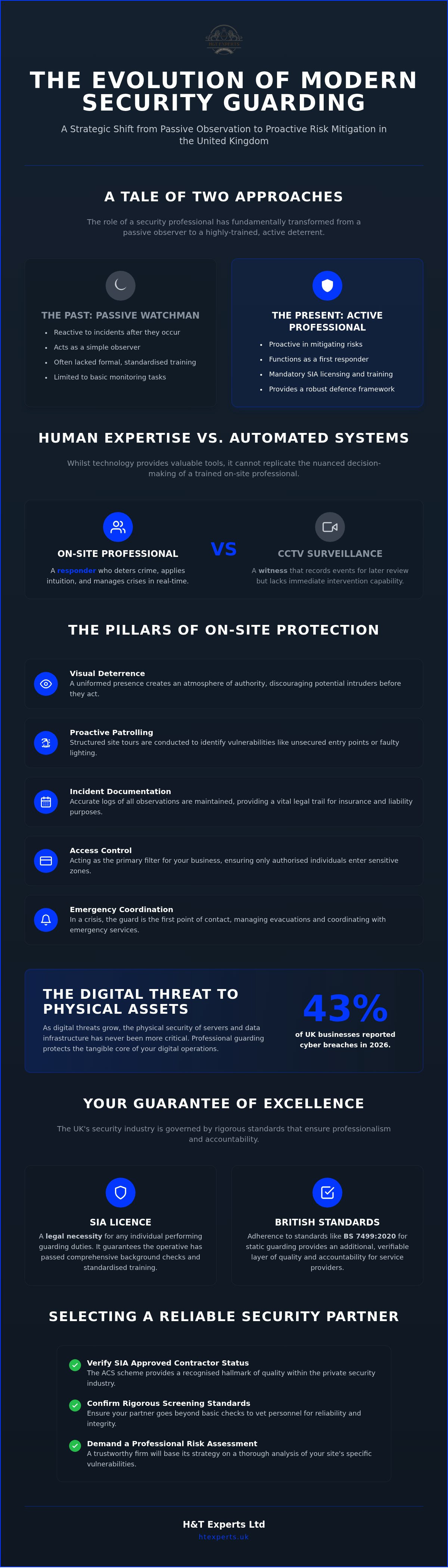
Modern security guarding is a disciplined operational framework designed to protect physical assets through the deployment of SIA-licensed professionals. It's no longer accurate to view this role through the lens of the traditional "night watchman." The industry has undergone a radical transformation, moving toward a model of sophisticated risk mitigation. Today's security professional is a highly trained specialist who monitors, manages, and secures premises with a level of oversight that technology alone cannot replicate. This evolution reflects a shift from passive observation to active, hands-on management.
Whilst digital surveillance has advanced, a physical presence remains the gold standard for deterring criminal behaviour. Cameras can record a breach, but they don't possess the psychological weight of a uniformed officer. A professional guard creates an immediate atmosphere of authority and readiness. This presence forces potential intruders to reconsider their actions, often preventing an incident before it begins. In an era where 43% of UK businesses reported cyber breaches in 2026, the physical security of the servers and infrastructure that house this data has never been more critical.
The Distinction Between Manned Guarding and Basic Monitoring
Passive monitoring through CCTV often fails because it lacks an immediate human response. A camera is a witness; a guard is a responder. Professional security guarding relies on human intuition to identify suspicious behaviour that software might overlook. Whether it's a subtle change in a person's demeanour or a slight irregularity in a site's perimeter, a guard's ability to process complex environmental cues is invaluable. Beyond deterrence, these professionals manage access control and maintain site integrity, ensuring that only authorised personnel enter sensitive areas. They don't just watch; they intervene and resolve.
Regulatory Standards: The SIA Framework
The Private Security Industry Act 2001 was the catalyst for professionalising the UK security sector. It established the Security Industry Authority (SIA) as a regulator to ensure that every operative meets rigorous standards. An SIA licence is a guarantee that a guard has passed comprehensive background checks and completed standardised training. It's a legal necessity for any individual performing guarding duties in the UK. Understanding Security guard roles and responsibilities is essential for business owners who must ensure their providers adhere to these legal requirements.
Adherence to British Standards, such as BS 7499:2020 for static guarding, provides an additional layer of accountability. Businesses shouldn't ever employ unlicensed personnel, as doing so creates significant legal and financial liabilities. A licensed guard isn't just a staff member; they're a certified component of your operational safety net, backed by a framework of integrity and professional pride.
The Core Responsibilities of a Professional Security Guard
Professional security guarding begins with the principle of visual deterrence. A uniformed presence immediately alters the risk profile of a site; it signals to potential intruders that the premises are under active protection. This isn't just about standing at a gate. It's about a disciplined methodology where the guard's very presence serves as a psychological barrier. When a site is managed by a vigilant guardian, the likelihood of opportunistic crime drops significantly because the cost of an attempted breach is too high.
Beyond deterrence, a guard's daily operations involve several critical functions that ensure total operational safety:
Proactive Patrolling
Effective site tours aren't random. They're structured movements designed to identify vulnerabilities like unsecured points of entry or malfunctioning lighting.
Access Control
Guards act as the primary filter for your business, ensuring only authorised individuals enter sensitive zones whilst maintaining a professional visitor log.
Incident Documentation
Every observation is recorded in an accurate site log. This documentation is vital for insurance purposes and provides a legal trail if a breach occurs.
Emergency Coordination
In a crisis, such as a fire or medical emergency, the guard is the first point of contact. They coordinate with emergency services and manage the safe evacuation of personnel.
Maintaining Vigilance Through Operational Oversight
A guard's effectiveness is only as strong as the management structure supporting them. High-performance security guarding requires clear reporting lines and consistent supervision. At H&T Experts, we leverage over 25 years of operational experience to ensure that every operative is backed by a robust leadership framework. We use modern technology to track patrol routes in real time, ensuring 100% site coverage and total accountability. This oversight ensures that site-specific training is constantly updated, keeping the team prepared for evolving threats. For businesses seeking this level of disciplined management, our professional security guarding services provide the necessary stability.
Communication and Conflict De-escalation
The most powerful tool in a guard's arsenal isn't physical force; it's verbal communication. Professionals regulated by the Security Industry Authority (SIA) are trained to manage unauthorised visitors or aggressive individuals with a calm, authoritative presence. De-escalation is a specialised skill that involves reading body language and using precise language to resolve tension before it leads to a physical incident. Maintaining composure under pressure is a hallmark of a seasoned expert. It ensures that your business reputation remains intact even during difficult interactions, as every situation is handled with integrity and professional pride.
Integrating Guarding with Advanced Surveillance and Monitoring
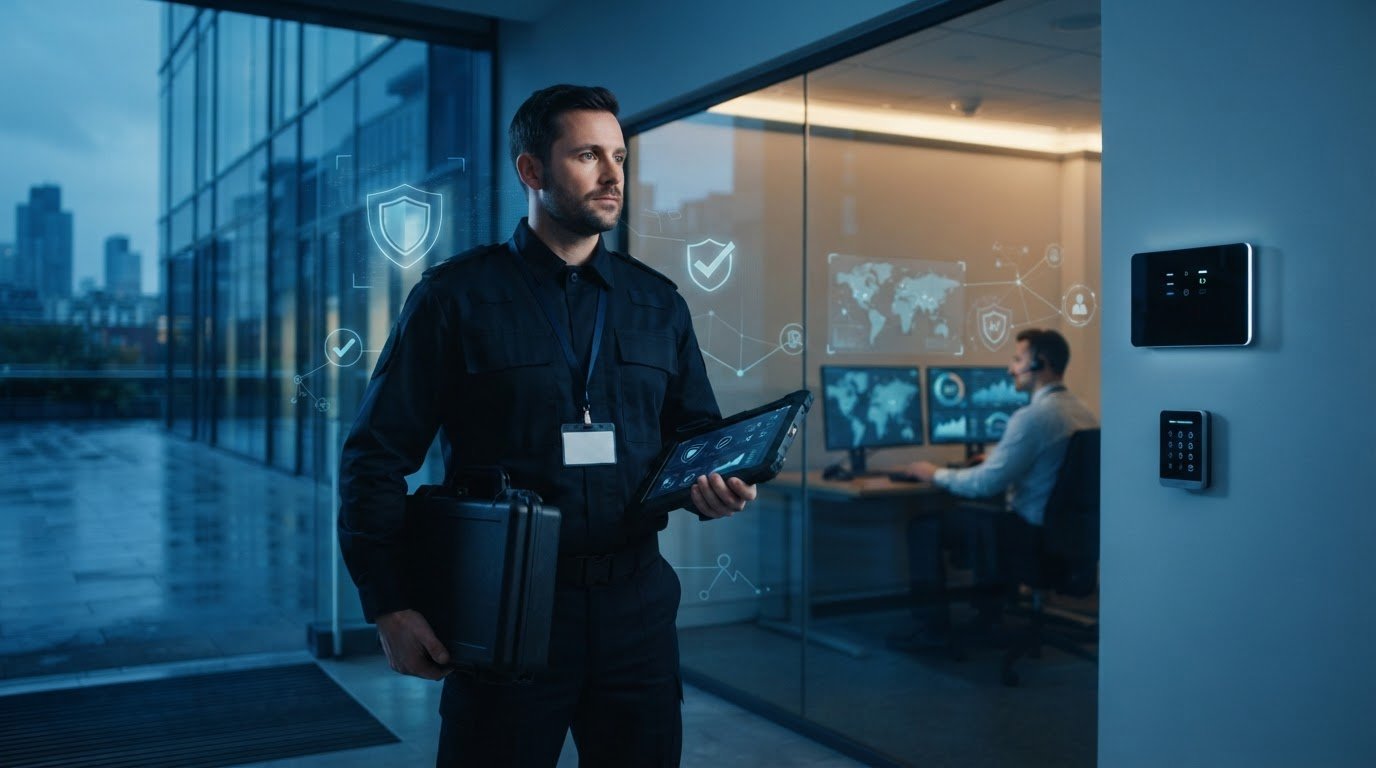
Effective security guarding doesn't exist in a vacuum. It's most potent when integrated with a network of 24/7 monitoring centres. Whilst some view human presence and technology as competing choices, the most secure sites treat them as a single, synergistic system. CCTV acts as the 'eyes' that provide a wide-angle view of the premises, whilst the guards act as the 'hands' capable of immediate, physical intervention. This combination ensures that no blind spot goes unmonitored and no detected threat goes unchallenged.
An integrated approach also drives cost-effectiveness. By using advanced surveillance to cover large perimeters, businesses can optimise their manpower, focusing on-site guards where they're most needed. When a breach is detected by an electronic sensor, the response is immediate and informed. This eliminates the delay inherent in relying solely on external emergency services, who may be miles away from the incident. Rapid intervention is the key to preventing loss.
The Benefits of 24/7 Monitoring Integration
Remote operators provide real-time intelligence to on-site teams, allowing guards to approach a situation with full situational awareness. This connection is vital for an effective emergency security response, as it ensures that the correct resources are deployed instantly. Human verification of electronic signals also significantly reduces the burden of false alarms. Operators can distinguish between a genuine intruder and a harmless environmental trigger, ensuring that on-site personnel only intervene when necessary. This level of oversight maintains the integrity of the security operation and prevents alarm fatigue.
Utilising Technology for Site Accountability
Modern security guarding leverages technology to ensure absolute transparency. Electronic patrol tagging systems provide verifiable proof that a guard has visited specific high-risk locations at the correct intervals. This data creates a digital footprint of the security operation, offering peace of mind to stakeholders. Additionally, body-worn cameras have become an essential tool for evidence gathering and de-escalation. They provide an objective record of interactions, which is invaluable for legal protection and insurance claims. The transition from traditional paper logbooks to digital incident management software allows for instant reporting and data analysis. This shift towards a data-driven approach ensures that our guardians are always one step ahead of potential threats.
Assessing Risk: When Does Your Business Require On-Site Personnel?
Deciding on the level of security guarding your business requires shouldn't be based on a reactive response to a single incident. Instead, it requires a methodical evaluation of risk. A professional risk assessment identifies high-value targets within your premises, such as plant machinery or proprietary data, whilst accounting for the local crime rate. Sprawling sites or those with complex layouts present far more opportunities for a breach than a single-entrance facility. In these environments, electronic systems alone often lack the adaptive response needed to manage logistics whilst maintaining a secure perimeter.
Historical incidents at the site also play a crucial role in determining the necessity of on-site personnel. If your premises have been targeted before, it's a clear indicator that your current deterrents are insufficient. A physical presence provides the immediate intervention capability that remote systems cannot offer. This proactive approach ensures that assets are managed with the discipline required to prevent loss and maintain operational continuity.
High-Risk Sectors Requiring Constant Vigilance
Certain industries face unique challenges that make on-site guarding essential for safety and compliance:
Construction sites
These locations are prime targets for the theft of expensive machinery and raw materials. Active patrolling prevents unauthorised access during out-of-hours periods, where a lack of presence could lead to significant project delays.
Corporate offices
Managing high volumes of daily visitors whilst securing intellectual property requires a professional guardian who can handle access control with authority and discretion.
Industrial and warehouse units
Preventing high-value theft is only one part of the role. Guards in these sectors are often trained in fire safety and emergency response to protect massive inventories from environmental risks.
The Link Between Site Hygiene and Security
The "Broken Windows Theory" suggests that a well-maintained, clean site is less likely to be targeted by criminals. Neglect signals a lack of oversight, which can invite opportunistic crime. Utilising specialist cleaning services UK contributes significantly to this sense of order and professionalism. When a site looks managed, it becomes a harder target for those looking for vulnerabilities.
During deep cleaning or routine maintenance, specialist teams often identify physical security gaps that might otherwise remain hidden. This could include damaged perimeter fencing, malfunctioning locks, or foliage that has grown to obscure CCTV lenses. This synergy between site hygiene and security guarding ensures that no vulnerability is left unaddressed. If you're ready to secure your premises with a partner that understands these intricate links, you can contact our team for a professional risk assessment to ensure your assets are protected by a vigilant guardian.
Establishing a Partnership with a Trusted Security Firm
Selecting a provider for security guarding is a high-stakes decision that impacts the fundamental safety of your operations. It shouldn't be treated as a cold transaction. You require a vigilant guardian who understands the weight of their responsibility and possesses the operational maturity to manage it. The first step in any evaluation is to verify SIA Approved Contractor status and adherence to British Standards, specifically BS7858 for the rigorous screening of personnel. These certifications provide an immediate baseline of competence and readiness.
Operational leadership is equally vital. You should prioritise firms with at least 20 years of industry history. Seasoned leadership brings a level of composure and disciplined oversight that newer agencies often lack. Furthermore, a multi-disciplinary approach is essential. A partner capable of integrating guarding with 24/7 monitoring and specialist cleaning offers a more comprehensive safety net. This synergy ensures that your site is not only protected but also maintained to a standard that naturally deters criminal interest. Finally, favour firms that offer a consultative partnership. A generic service contract cannot address the unique vulnerabilities of a complex site.
Questions to Ask a Potential Security Partner
Before entering into a long-term agreement, you must challenge the firm's operational capabilities. Direct questions often reveal the depth of their commitment to excellence. Consider asking the following:
• How do you ensure the continuous training and discipline of your guards beyond their initial licensing?
• What is your average response time for an emergency alert across different UK regions?
• Can you provide an integrated solution that covers both security and specialist maintenance tasks?
The Importance of Transparency and Accountability
Accountability is the bedrock of professional security. You should demand regular site audits and performance reviews to ensure that standards never slip. A dedicated contract manager serves as a single point of contact, ensuring clear lines of responsibility and immediate response to your concerns. This structured approach eliminates the confusion often found in larger, less organised agencies.
H&T Experts leverages over 25 years of operational experience to manage complex security needs with total transparency. We believe that professional pride is maintained through rigorous oversight and a personal investment in our clients' peace of mind. By establishing clear reporting frameworks and digital incident logs, we ensure that every action taken on your site is documented and verifiable. This level of integrity is what transforms a standard guarding service into a steadfast partnership.
Securing Your Operational Future Through Disciplined Guarding
Effective asset protection in 2026 requires more than a passive presence. It demands a sophisticated integration of SIA-licensed human expertise and 24/7 technological oversight. By understanding the methodology of security guarding and the critical link between site maintenance and risk mitigation, you can transform your premises from a potential target into a fortified operational centre. This proactive stance is the only way to ensure total safety whilst managing the complex liabilities of modern business.
H&T Experts Ltd provides this level of steadfast protection. Led by Director Jamie Treloar with over 25 years of operational experience, we specialise in the seamless integration of professional monitoring, emergency response, and specialist cleaning. We don't just provide a service; we act as a vigilant partner in your peace of mind. Our approach ensures that every vulnerability is identified and managed with professional pride. Secure your premises with the expertise of H&T Experts Ltd today and take the first step towards a safer, more resilient operational future.
Frequently Asked Questions
What is the difference between a security guard and a door supervisor?
A door supervisor licence allows an operative to work at premises where alcohol is sold or regulated entertainment is provided, whereas a security guard licence does not. Whilst both roles involve security guarding duties, the door supervisor qualification includes additional training in physical intervention and conflict management. This makes the door supervisor licence more versatile, as it covers all the legal requirements of a standard guarding role whilst permitting work in the hospitality sector.
Do security guards in the UK have the power of arrest?
Security guards in the UK don't possess police powers; they hold the same "any person" arrest authority as any other citizen. This is governed by Section 24A of the Police and Criminal Evidence Act 1984. An arrest can only be made if a person is in the act of committing an indictable offence or if there are reasonable grounds to suspect they've committed one. It's a measure used only when immediate police intervention is unavailable.
How much does professional security guarding cost in the UK for 2026?
The cost of security guarding in 2026 is influenced by statutory overheads like the National Living Wage, which rose to £12.71 per hour on 1 April 2026. Providers also manage costs such as the £204 SIA licence fee and the ACS annual fee of £25 per licensable person. Whilst we don't provide fixed rates here, businesses should expect pricing that reflects these regulatory standards and the high level of training required for professional asset protection.
Is it better to have CCTV monitoring or a physical security guard?
A physical security guard is generally superior for immediate intervention, whilst CCTV serves as an excellent tool for evidence and broad-area monitoring. As discussed earlier, the most robust defence is a hybrid model. Cameras act as the eyes of an operation, but they can't physically secure a door or de-escalate a confrontation. A guard provides the human intuition and physical response that electronic systems simply can't replicate in a high-stakes crisis.
What qualifications should I look for when hiring a security company?
You must verify that a company holds SIA Approved Contractor Scheme (ACS) status and adheres to British Standard BS 7499:2020 for static guarding. It's also vital to ensure all personnel are screened to BS 7858 standards. Look for firms with significant operational history, such as those led by directors with over 25 years of experience. These credentials guarantee that the provider operates with the discipline and integrity required for professional asset protection.
Can security guards carry any form of defensive equipment in the UK?
UK security guards are generally prohibited from carrying defensive equipment such as batons, handcuffs, or incapacitant sprays. Carrying such items without specific legal authorisation can lead to prosecution under the Firearms Act or the Prevention of Crime Act. Professional guards rely on their training in conflict de-escalation and verbal communication to manage threats. Their primary role is to observe, report, and maintain a calm, authoritative presence whilst awaiting emergency services if necessary.
How many security guards do I need for my commercial premises?
The number of guards required depends entirely on a professional risk assessment of your site's size, complexity, and local crime profile. A small office might only require a single operative for access control, whereas a sprawling construction site often needs multiple guards to ensure 100% perimeter coverage. We evaluate factors like high-value targets and historical incidents to determine the exact manpower needed to maintain a constant state of readiness and operational safety.
What happens if a security guard fails to prevent a break-in?
If a break-in occurs, the guard's primary responsibility is to follow established emergency protocols and document the incident accurately. Liability is usually determined by the specific terms of the service contract and whether the guard followed the agreed patrolling methodology. This is why disciplined incident reporting and digital logs are essential; they provide a verifiable trail of activity that protects both the business and the security firm during insurance or legal reviews after a breach.




Ready to Experience Unparalleled Security Solutions?
H&T Experts Ltd is here to ensure your peace of mind. Connect with us today and take the first step towards a safer tomorrow.